

Functional Safety Management
Planning, coordination, tracking, confirmation measures, audits, assessments, and safety-case support.
Functional Safety is not a single activity at the end of development. It is a complete engineering lifecycle that must be planned, executed, documented, verified, and confirmed from the earliest concept phase through production and operation.
Root Cause Technologies supports companies across the complete automotive/rail/industrial Functional Safety lifecycle. Whether you need end-to-end ownership, temporary expert support, independent review, or support for specific work products, we help your teams apply safety engineering in a practical, structured, and standards-oriented way.
Our services cover both Functional Safety Management and Functional Safety Engineering, enabling us to support the organizational, process, and technical aspects of safety-critical development.
Planning, coordination, tracking, confirmation measures, audits, assessments, and safety-case support.
Item definition, HARA, safety goals, Functional Safety Concept, and early safety argumentation.
Technical Safety Concept, safety architecture, safety requirement decomposition, interface definition, and system-level analysis.
Safety concept, hardware safety requirements, FPGA safety architecture, FMEDA support, safety mechanisms, diagnostic coverage, and safety manual support.
Software safety requirements, safety architecture, embedded safety mechanisms, software analysis, traceability, and verification support.
Safety verification planning, test strategy, requirement-based testing, fault injection, evidence creation, and validation support.
Safety reviews, audits, gap analysis, assessment preparation, safety-case structuring, and release support.
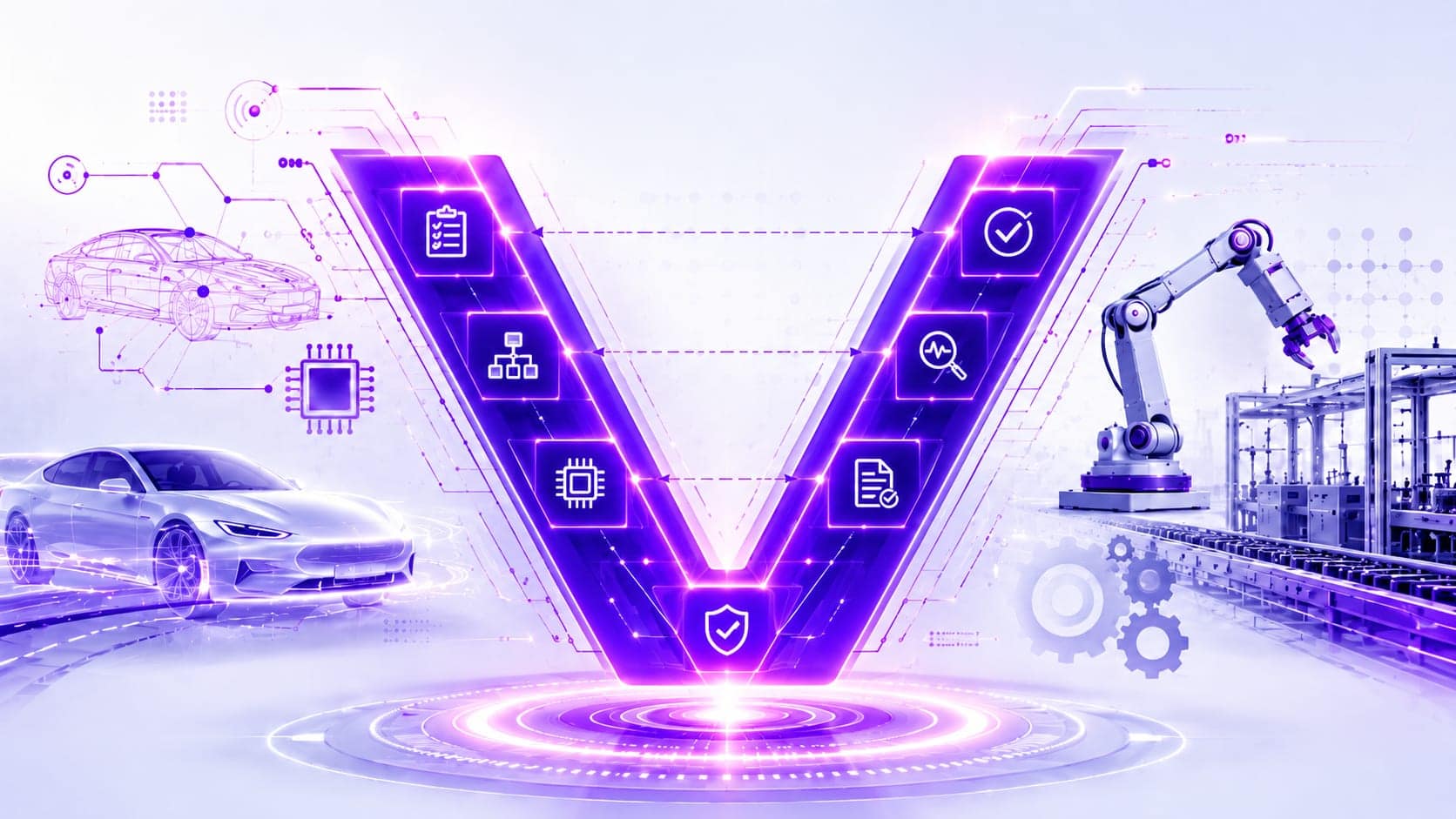
The V-Model is central to safety-critical automotive development. On the left side, safety requirements are defined and decomposed. At the bottom, the system is implemented. On the right side, verification and validation activities demonstrate that the implementation satisfies the intended safety requirements.
Root Cause Technologies provides safety engineering support at every stage of this lifecycle.
The concept phase defines what must be made safe, why it must be safe, and which safety goals need to be achieved.
At system level, safety goals are transformed into technical safety requirements and system architecture decisions.
Safety must be considered at architecture, design, implementation, and verification levels for automotive semiconductor and FPGA development.
Close alignment between hardware, FPGA, firmware, embedded software, and system-level behavior is essential for safety.
Verification and validation prove that safety requirements have been implemented correctly and that the system behaves safely in the intended context.
Before release, safety activities must be reviewed, confirmed, and documented.
Functional Safety continues after development to preserve the safety integrity of the product.